

Science fiction lets us pre-game reality, arriving in the future forewarned and forearmed. For me, that’s the whole point of the genre. I grew up on Star Trek, and even as 1970s reruns, it seemed simultaneously dated (the wooden women voicing inanimate computers) and futuristic (warp drive!) But mostly, the show ignores technical tachyon-beam logic to focus on issues like the utility of money in a world of abundance.
Lately my wife and I have been pairing the current-best-Trek, Lower Decks, with Deep Space Nine, the show we watched when we were dating in the ‘90s. Our most recently watched Lower Decks episode, “Hear All, Trust Nothing,” returns to Deep Space 9, and zooms in on Quark — the Ferengi bartender from the OG DS9.
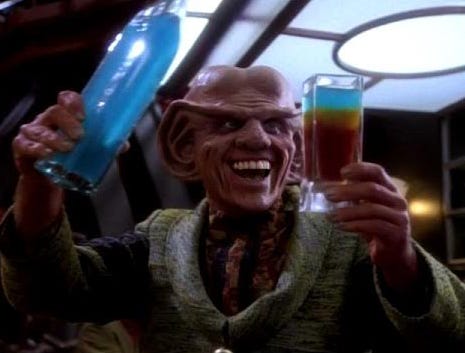
The Ferengi are Star Trek’s Ur-capitalists and white collar criminals. Quark (we learn) has built a Planet Hollywood-style franchise empire around the “Quark 2000,” a food replicator he claims produces food and drink with a “special zing.” Being Quark, it’s stolen tech. When busted, Quark’s defense is simple:
“I may have borrowed a Karemma replicator some years ago, but it was my codes that made the bar so popular.”
Replicators Are Boring
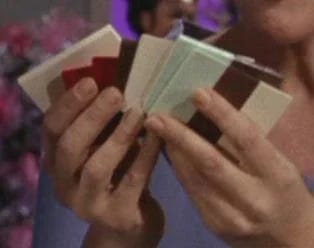
In Trek, replicators are plumbing. Early “Food synthesizers” required codes, as we learn when Nurse Chapel hands children flavor-specific Ice Cream codes in “And the Children Shall Lead” (TOS S3E4).
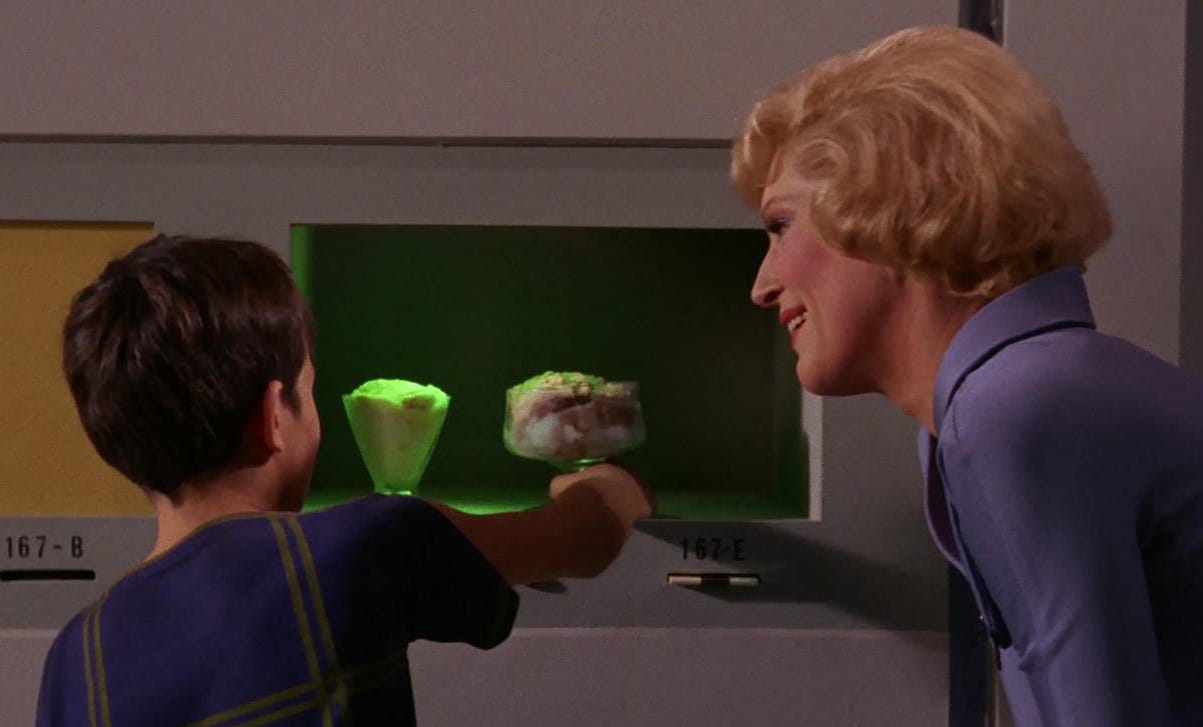
Code>Replicator>Food. No Code? No Rocky Road.
But nobody negotiates treaties over replicator food. Replicators (and their malfunctions) are mostly used for comic relief. Real food (whether Klingon, Human or Vulcan) is special in Star Trek.
People travel from all over the galaxy for the Gumbo made by Captain Sisko (captain of Deep Space 9) in his kitchen, or his family’s New Orleans restaurant. Captain Pike of Strange New Worlds turns cooking into diplomatic ritual. Captain Picard retires to make wine in France.
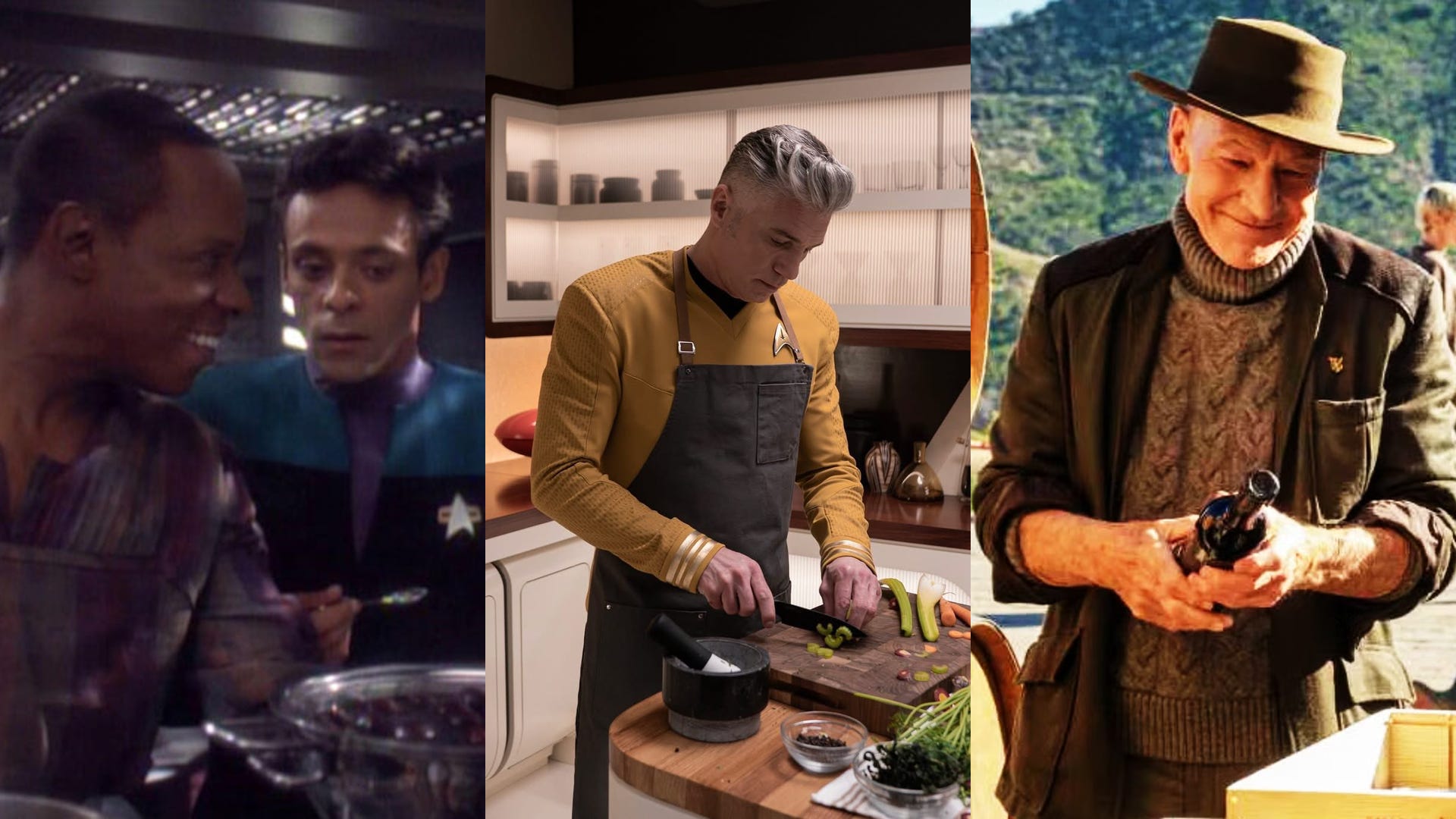
Quark sits in the middle. His codes -- his IP, customer relationships and the non-replicated “extras” from fancy bottles -- those are what make Quark’s unique. His codes bridge the gap between Nurse Chapel’s commodity ice-cream slop, and Sisko’s artisanal Gumbo.
Quark:
Knows his customers. Quark’s a *bartender*. The mess hall serves food. Quark serves experience, conversation, customization and novelty.
Knows his tools. Quark doesn’t just push buttons. He “acquired” the best tech and spent years mastering how to use it to please his customers.
Has taste. Quark’s food has to actually be good. Without discernment and editorial restraint, he loses customers.
Nobody ever suggests he isn’t good at his job. But his job isn’t “chef.” It’s “bartender.”
The Uncomfortable Part
Consider two meals: a gas station tuna sandwich, versus dinner at your house.
I inhale the sandwich. I don’t savor the fish, or admire the crust of the bread. It asks for and receives very little of my time and attention. It’s replicator food.
At your house, I sit at the kitchen counter while you cook. I’m engaged. I ask questions about the paprika. You show off your ridiculous copper pans. I compliment you on your knife skills.
In both cases I end up nourished. Only in one am I truly fed.
But if you come over to my house for dinner (while my wife’s away) things get tricky. I love food but I’m a bad cook. For me Quark’s replicator is a superpower. It takes something that I’m not good at or particularly enjoy and helps me make a meal tailored to your tastes. Because I know you, and I know what you like, and I have my own ideas about what makes food “good.”
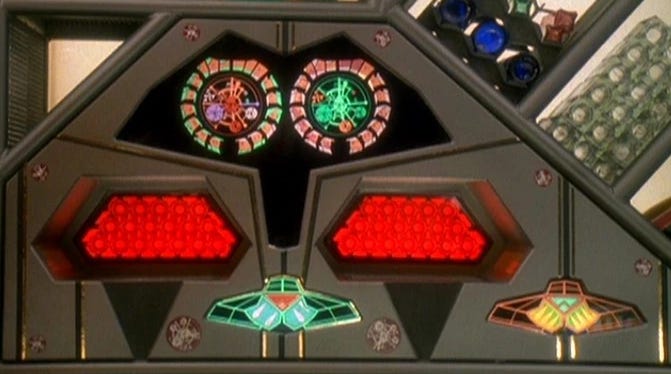
But, critically, after loading my codes into my Quark 2000, I would not expect you to compliment me on “my cooking,” and we would not spend the evening talking about “my food.” It would just be better food than I would make on my own, and we would both be happier for it.
Quark’s (Word) Replicator
Sisko and Pike still cook, and having a Word Replicator hasn’t really changed how I think about writing. I enjoy “cooking” too much to hand it over to a machine.
But Quark’s Word Replicator has profoundly changed my relationship with reading.
Pre-AI, reading was a contract. “I’ve put my heart, soul, brain, energy, expertise, pain, tiredness, excitement and love into this artifact, I would like you to read it so we can connect,” says the author. “I will read these words attentively and gently with that in mind,” I say in return.
That contract is broken. Now, I have to assume that any substantive writing wasn’t bled onto the page from a human brain. Instead I have to assume:
The author had some interesting conversations with an AI, developed some ideas to explore, had the AI read additional primary source documents to support or tweak those ideas, and then had the AI take the first crack at an outline and probably at least a draft.
The author’s “editorial” process was feeding lightly-rewritten text into an adversarial AI to shore up the arguments.
The author owns “the ideas” but has no real connection to the specific way language was used to communicate them.
Put another way, I have to assume that any meal has come from a replicator, no matter how special the codes.
AI;DR
Back in peak blog, “TL;DR” was the ultimate dismissal. Longwindedness was a gate. Only the best content earned a thoughtful hour of reader attention.
Now it’s “AI;DR.” That 5,000 word polemic on labor markets? Right into the LLM for a summary. After all, if something is produced with AI, it seems incongruous to expect it not to be consumed by AI.
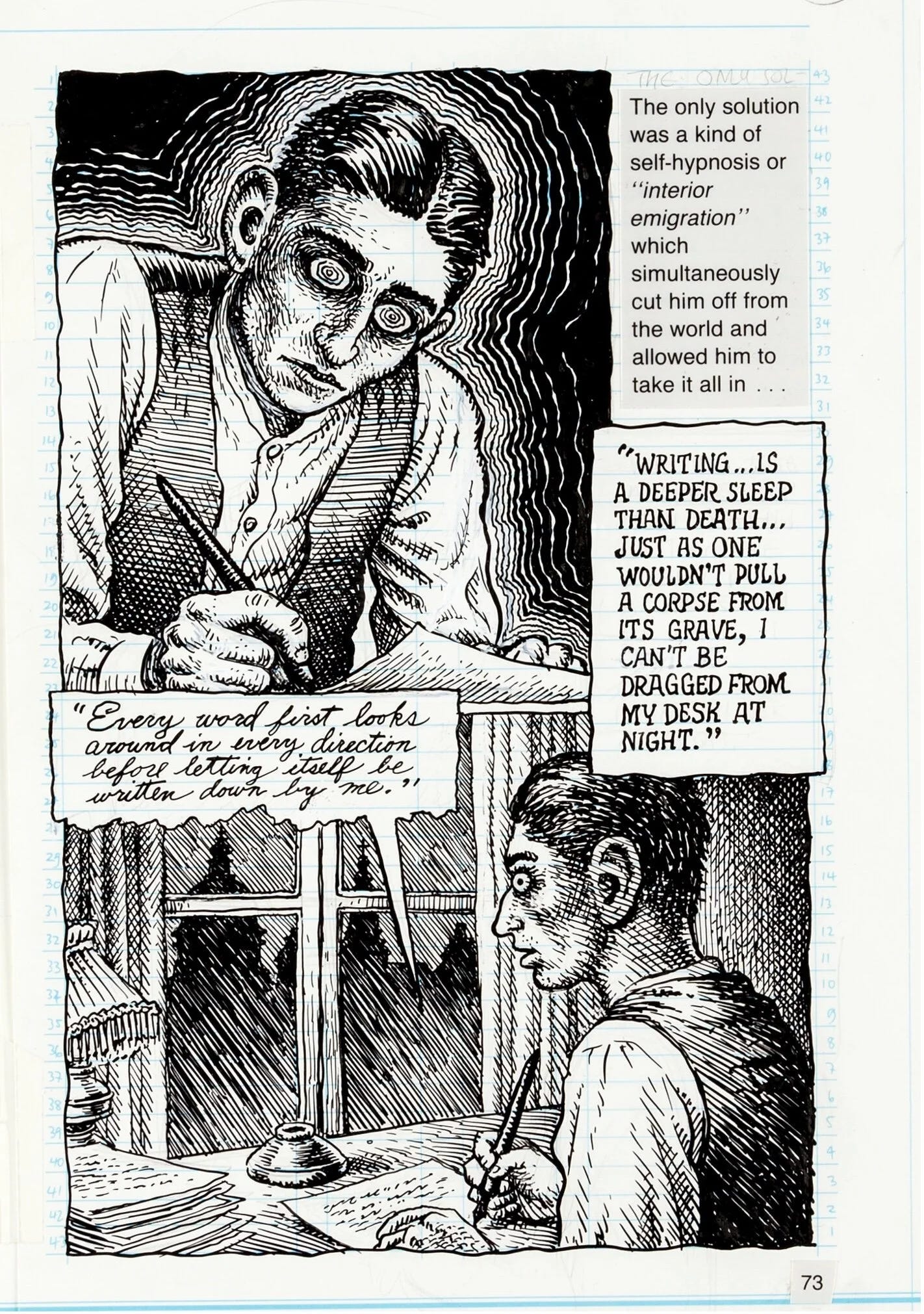
But if we’re feeding AI-coauthored content into AI-summarizers, are we still connecting as humans? Is it really even language anymore, if it’s this intermediated? Isn’t the point of language, as Stephen King puts it in “On Writing: A Memoir of the Craft,” human-to-human telepathy?
“Look—here’s a table covered with a red cloth. On it is a cage the size of a small fish aquarium. In the cage is a white rabbit with a pink nose and pink rimmed eyes. In its front paws is a carrot-stub upon which it is contentedly munching. On its back, clearly marked in blue ink, is the numeral 8. Do we see the same thing? We’d have to get together and compare notes to make absolutely sure, but I think we do...
I sent you a table with a red cloth on it, a cage, a rabbit, and the number eight in blue ink. You got them all, especially that blue eight. We’ve engaged in an act of telepathy. No mythy-mountain shit; real telepathy. I’m not going to belabor the point, but before we go any further you have to understand that I’m not trying to be cute; there is a point to be made.”
If the Author really only cares about their ideas in the abstract, not the telepathy, then why go through the theatrics of human-sounding prose at all? Why not just publish knowledge graphs (to parrot Stephen Wolfram)?
What’s Your Gumbo?
The challenge as a creator is to distinguish craft from codes.
This right here: me, sweaty and tired, agonizing over word choices and writing paragraphs in my head over and over again; happy, sad, angry and frustrated over how to cut another 100 words. This is the craft I choose. I’ll never compete with the replicators on volume.
Maybe your craft is the economics, the policy, the illustration, or the math. But writing a punchy opening? Just codes.
As a reader, this adjustment is hard. I love words more than I love food. But I am trying, because (even as hermitic as I am) I care about people, not data. Trust is only built when we share things that are uniquely human: the meal, the painting, the performance, the kind word, the loving embrace, the shared silence of a walk in the woods.
I used to treat every essay as a fine meal, ready to ask about the paprika. That world is genuinely gone. In the post-replicator now, my attention is a finite gift. And I’m saving my appetite for the shaky hands of the meatsack author and the plaintive request for telepathy.
Very good.
Man, this is good. Thank you.